How to Choose the Right Two-Way Radio for your Needs?
Overview
Digital radios, with their advanced features and improved communication quality, enhance the range and privacy of two-way communication, especially in environments with potential interference. Whether used in construction, emergency services, or recreational activities, selecting the right device ensures reliable and clear communication. Here we discuss how to choose the right two-way radio for your needs.
What are two-way radios
Two-way radios are portable communication devices that let users send and receive messages using radio waves. Unlike mobile phones, they work independently of cellular networks, making them ideal for challenging environments like construction sites, remote areas, or professional settings.
They utilize radio frequency to function, with distinctions between VHF (Very-high frequency) and UHF (Ultra-high frequency) bands that offer different advantages based on distance and obstructions. They operate on shared frequency bands, enabling communication over various distances.
Let's understand
How do two-way radios work
Two-way radios, or walkie talkies, operate by transmitting and receiving audio signals through radio waves.
When you speak into a two-way radio, your voice is converted into an electrical signal. This signal is then transmitted as a radio wave via the radio’s antenna.
Other radios on the same frequency receive this radio wave and convert it back into an audio signal, allowing the recipient to hear your message.
The magic happens thanks to the radio’s transmitter and receiver components. The transmitter takes the electrical signal and turns it into a radio wave, while the receiver does the reverse, converting the radio wave back into an electrical signal.
This process is facilitated by frequency modulation (FM), which encodes the audio signal onto the radio wave.
Modern two-way radios can do more than just voice communication. They can also transmit data, such as text messages or GPS coordinates, using digital modulation techniques like frequency-shift keying (FSK) or amplitude-shift keying (ASK).
This versatility makes two-way radios invaluable tools for various applications, from professional use to recreational activities.
Key factors to consider:
1. Frequency Bands: UHF vs. VHF
Two-way radios use ultra-high frequency (UHF) or very high frequency (VHF) bands. UHF radios perform well in areas with obstacles, like buildings. VHF radios are better for open spaces such as fields and water.
2. Range and Coverage
The range depends on terrain and power output. Under ideal conditions, the maximum range of two-way radios using PMR446 frequency with 0.5W transmit power can be up to 10 kilometers. For longer range, professional radios with higher power output are better. However, actual range varies with environmental factors.
3. Battery Life
Choose radios with longer battery life for extended use. This is especially important in work environments or activities requiring reliable communication.
4. Durability
In rugged conditions, such as construction sites or the mining industry, radios with high IP ratings provide resistance to water and dust.
For radio enthusiasts, the durability of these radios is essential, as they often use their devices in challenging environments.

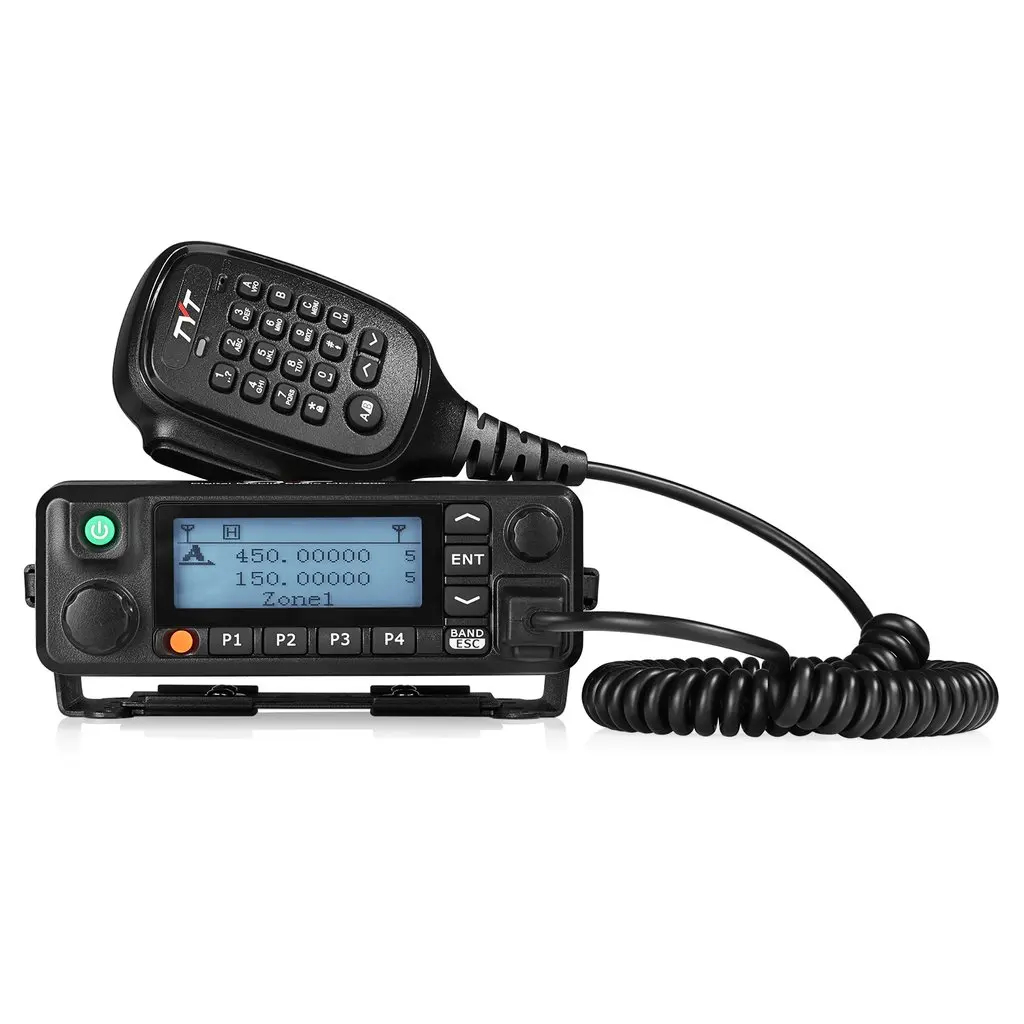
TYT MD-9600 Dmr Radio Dual Band, Dual Display, Dual Standby 3000 Channels 50w Output Power Mobile Radio
In stock
Good option for vehicles
As bracket and 12v power cable comes along to be installed in the vehicles, it well suited to be permanently positioned in vehicles so that radio communication is always available while you are driving.
- Instant, Group Communication: Two-way radios provide immediate, "push-to-talk" (PTT) communication to individuals or entire groups simultaneously, without the need for dialing, ringing, or connection delays. This is critical for rapid coordination in dynamic environments.
- Enhanced Safety:
- Reduced Driver Distraction: In-vehicle radios, often used with hands-free accessories like speaker microphones or foot pedals, allow drivers to communicate while keeping their hands on the wheel and eyes on the road, which is often a legal requirement and much safer than using a cell phone while driving.
- Emergency Response: In emergencies, dedicated emergency buttons can instantly broadcast a distress signal and location (if equipped with GPS) to all personnel or dispatch, ensuring a faster, more coordinated response.
- Worker Safety Features: Features like "Lone Worker" (requires periodic check-ins) and "Man Down" (automatically alerts if a lack of movement or a fall is detected) help protect employees in isolated or hazardous areas.
Individual Radios
Allocating individual two-way radios offers significant benefits in professional settings by providing a dedicated, reliable, and instant communication system that enhances safety, efficiency, and coordination. You can select varieties of available handheld radios from the list and choose the one that fits your business needs.
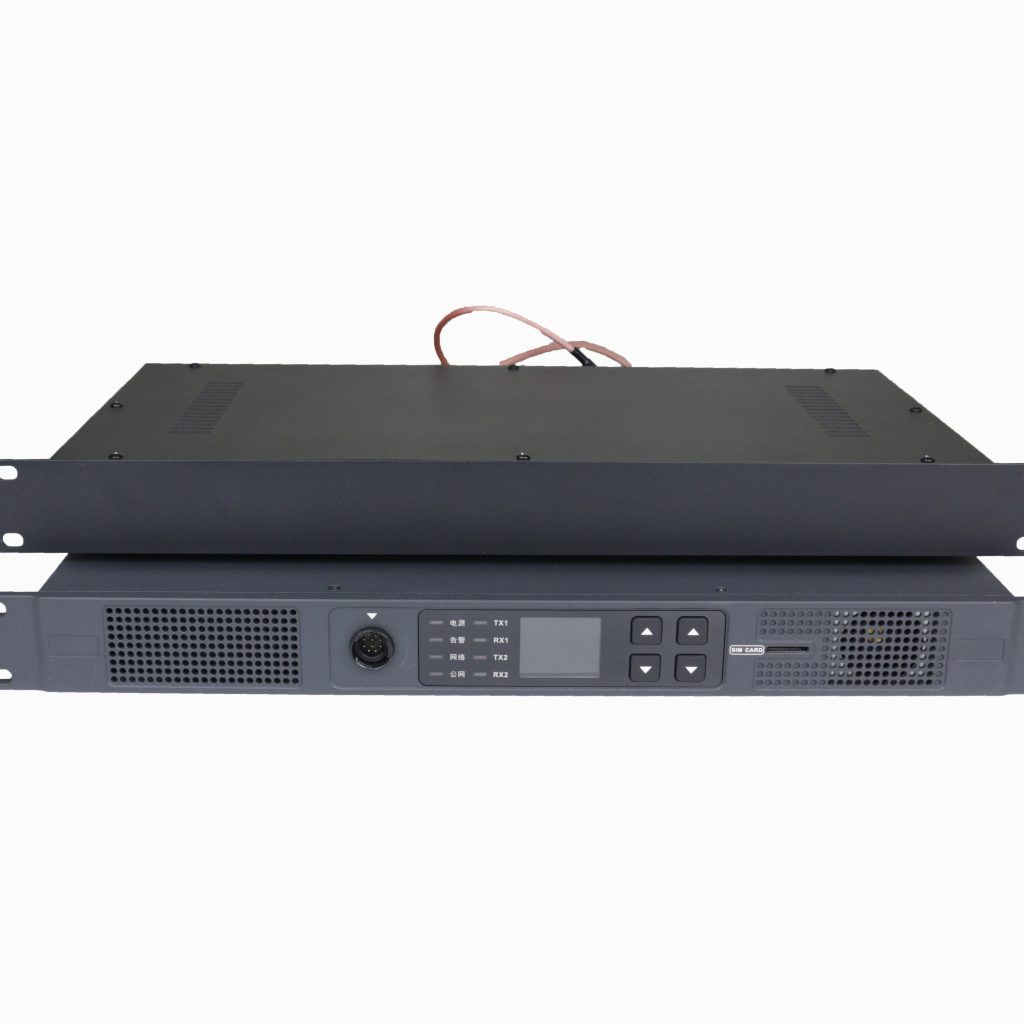
DMIPR7500 – LCD Display POC and DMR and Analog Repeater 45W Ultra-high Power TOT End-tone Elimination
In stock
Complete Radio System
You can discuss the requirements with us.
If your business needs multiple talk groups and needs to be distributed through plant areas which are hundreds of meters long, then you should be choosing core repeaters along with compatible radios.